Full text
To accuse Russia of being a backward nation seems to be a reasonable statement. Throughout their history, they can be characterized as a people who are constantly trying to catch up with Western Europe. Such a characterization is appropriate, but it is hardly interesting. A study of a particular section of the Russian state—in this case its navy—is more captivating. If the role of a navy is to defend its country’s interests, then considering that navy in times of peace is utterly useless because a peacetime navy is not serving its country. Instead, one must study a war in which navies played a significant role. In other words, one must study the Russo Japanese war. If such a study reveals that the Russian navy is made up of incompetent captains controlling ancient ships and led by an admiralty guided by obsolete strategies then one may say that the Russian navy is indeed a backward navy- one which has a great deal of catching up to do. Because the character of a military force reflects the character of its nation, one can even use this conclusion to support the original statement about the Russian state. Finally, since Russia’s defeat in this war helped instigate revolution by exposing Russia’s backwardness to its people, it seems that this defeat would also be a logical means for us to understand that backwardness.
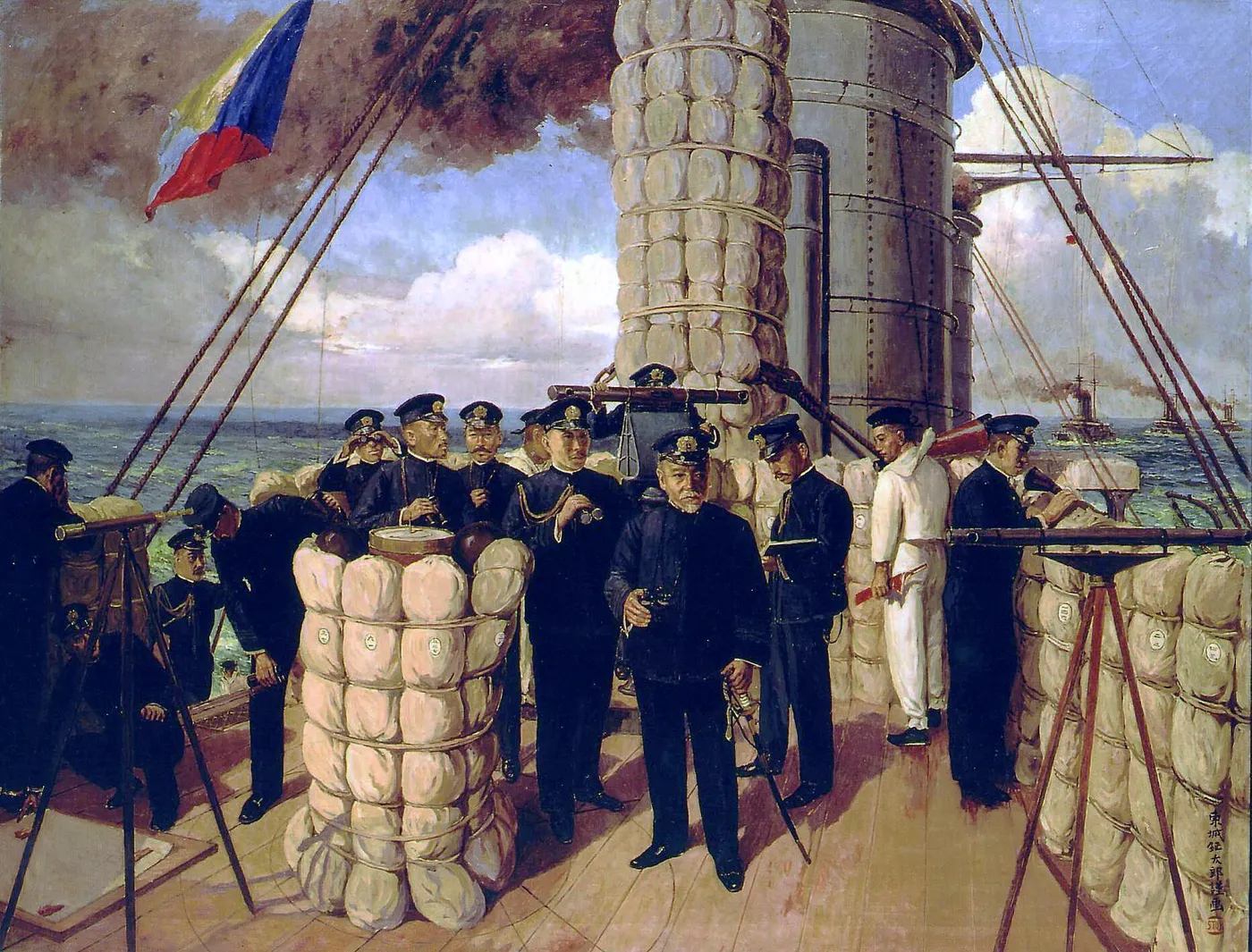
The Russo Japanese war started on January 26th 1904 when the Japanese, under admiral Togo, launched a surprise torpedo attack on Russia’s Port Arthur. The causes for the war can be traced back to the 1890’s, when Russia gave up its cautious foreign policy in the Pacific and adopted a deliberately aggressive stance in the region. Eager to join the other European powers in the plundering of China, Russia acted to extend its sphere of influence to include Manchuria and Korea. A key step toward this goal was the construction of the Trans-Siberian Railroad. Russia also used diplomatic pressure to force the Japanese withdrawal from Port Arthur. The Japanese had secured that port after the Sino Japanese war. This humiliation created hostile feelings in Japan, and sent it into military production. By the turn of the century, the Russians had expanded their control in Manchuria, while the Japanese did the same in Korea. When a Russian speculator received a contract for Korean lumber, the Japanese took offence. The Japanese offered a treaty that split the contested region into separate spheres of influence to lower tensions. When St Petersburg did not reply, the Japanese launched their attack and started the war. Admiral Togo’s attack on Port Arthur developed into a siege that lasted until Port Arthur was taken by the Japanese army in December. In June, the Russian admiralty decided to refit the Baltic fleet and use it to lift the siege. Renamed the Second Pacific Fleet, it was sent halfway around the world to regain control of the Pacific theater. While the fleet was underway, Port Arthur was taken, so that when Admiral Rozhdestvensky and his fleet arrived on the Sea of Japan, he faced the Japanese alone. He was soundly defeated. In the meantime, the Japanese army won victory after victory over the Russians. The Russians, stricken with revolution, sued for peace and the Japanese happily accepted. The striking outcome of the war illuminates just how backwards the Russian state was: that it was beaten so convincingly by a young and small Japan. It also shows how fast Japan managed to modernize: that it was able to defeat the great and ancient Russia. In either case, it does not speak well for Russia or for its navy. Let us delve further into the story, that we may better understand this important war.
The naval conflict can be reasonably split into two sections. First, we have the slow destruction by siege of Port Arthur and the Russian Pacific Fleet. The siege was an eleven-month battle of attrition that contrasts sharply with the second conflict. When Russian reinforcements arrived on the Pacific in late May 1905, they were defeated in a quick two-day showdown in the Tsushima Straight. Admiral Togo, commander of the Japanese fleet, was a remarkable strategist; he faced very different tactical situations throughout the war and developed strategies which completely destroyed both the Russian fleets with minimal loses.
At the outset of the war, Admiral Togo had the great advantage of surprise. However, he had a number of inhibiting considerations. While he could have destroyed the entire Russian fleet with one surprise blow, he would run the intolerable risk of Russian ships returning fire and damaging one of his battleships. This possibility was unacceptable because Admiral Togo had to protect the supply lines of the Japanese army fighting in Manchuria. Since Japan was a young nation that had no naval reserves, any loses suffered while destroying the Russian fleet in Port Arthur would reduce his ability to repel the coming Baltic fleet. Therefore, Admiral Togo had to be very cautious.
Admiral Togo’s first move was to escort troop transports to Chemulpo, on western Korea, with a cruiser force. Japanese troops cut the telegraph cables so that the defenses at Port Arthur were not alerted. Admiral Togo then launched a torpedo attack on the fleet in Port Arthur. He damaged two battleships and a cruiser, rendering them unseaworthy for a short time. His surprise attack also stunned the men at Port Arthur, putting them in a paralytic mindset. Togo used his destroyers to establish the Japanese as a lurking presence on the horizon. He also periodically used his battleships to conduct long-range bombardment in order to further depress the mood in Port Arthur. By demoralizing the Russian fleet into inaction, Togo essentially secured the sea-lanes around Korea by default.
The remarkable initial success of the Japanese fleet was facilitated by an extremely cautious Russian strategy. A correct deployment of the Russian fleet would have been to, “assume a limited tactical offensive against Japans maritime supply lines while preserving itself as a fleet-in-being until it could be combined with the Baltic Fleet.”1 Instead, Vice Admiral Alekseyev opted to use his fleet as a ‘fortress fleet’: keeping his fleet in port and adding his guns to the land defenses of Port Arthur. This strategy is not without advantages because it preserves the fleet so long as the town is secure. However, in this case it was somewhat shortsighted because the Japanese army was making great progress, thanks to the clear supply lines guaranteed by Admiral Togo, and would soon capture Port Arthur. Also, such inaction continued to eat away at the moral of the Russian crews and conversely, elevated the moral of the Japanese sailors.
Tsar Nicholas II realized that the commanders in the Pacific were incompetent and unable to counter the Japanese surprise attack. He decided to send Admiral Stepan O. Makarov to the Pacific. Makarov was one of Russia’s greatest naval officers. His praises include, “inseparably linked with the history of the development of the Russian fleet”, “a recognized authority in the sphere of naval tactics”, “[Russia’s navy’s] most talented representative in the late 1800s and early 1900s” and perhaps most impressively, “Makarov was one of the most talented and eminent sailors of his day, and, in the eyes of many of his contemporaries, a naval theorist who ranked with Philip H. Colomb and Alfred T. Hahan.”2 Sending this extremely capable man to the besieged Port Arthur may be one of the only things the Russian government did correctly in the course of this war, though they did so a few years too late.
Admiral Makarov grew up and attended naval school in the Siberian port of Nikolaevsk-na-Amure. He finished his training in the Baltic Fleet and started what would become a long list of naval inventions by improving the survivability of warships. In the war against Turkey, Makarov commanded a steamer that he converted to tow torpedo launches. His successful torpedo campaign drew a lot of attention to him, earning him national fame, numerous decorations, and a promotion. The next 25 years were spent making remarkable advances in all types of naval service, including diplomacy, Arctic exploration, ship design, oceanography, and finally, a lot of professional writing. He voiced opposition to Russia’s naval policy on several occasions. Makarov stressed that the fleet should be ready for war, that the crews should be thoroughly trained and that war plans should be drawn up. He also exposed the insufficiencies of Port Arthur and Vladivostok as naval bases and requested uniformity in ship types, long-range reconnaissance, improved artillery, armor plate, and naval communications. None of his recommendations were headed, though he was later proved to be right on every count.
When Makarov arrived in Port Arthur, after gathering his staff and making the long journey by train, he was greeted by a dismal situation. For the past seven years, the previous commander, Alekseyev, had allowed the squadron’s quality to decline. He had also neglected to improve Port Arthur as a naval base. The distance to Vladivostok, the only other Russian port on the Pacific, compounded this weakness. The harbor had not been deepened, so that the fleet could only leave at high tide. The situation seemed completely hopeless: “There was no agreed-upon strategy beyond vaguely expressed hopes, no arrangements for co-operation with the Russian Army, and no war plans either in Petrograd or Port Arthur.”3 In addition, there was only a very poor intelligence network. Training in the operation of the fleet was so neglected that the fleet required nearly a day simply to leave the harbor.4 The rest of the leadership was equally inefficient. Their inability was brutally unveiled after the Japanese attack. This attack had crippled two battleships and a cruiser. Those ships that remained of the Russian fleet were smaller, slower, and weaker than their Japanese counterparts. In addition, the Japanese were better trained than the Russians. S.O. Makarov’s assignment was formidable indeed: He was to whip the fleet into shape, use it to defeat Admiral Togo, and regain control of the Pacific.
Makarov’s first task, to lift the morale of the troops, was aided greatly because he was regarded as a hero for his successful torpedo campaign against the Turks. He set about to undo the effects of years of neglect by directing long days of training, repairing the damaged vessels and patrolling the nearby ocean with destroyers. After one month the moral was high and the skills were swiftly improving, though still far short of the Japanese. The Japanese, wary of the increased aggressiveness of the Russians, sought to land a decisive blow that would reduce Russian morale again. With luck that borders on unfairness, the Japanese succeeded in sinking Makarov’s flagship with a mine, killing the admiral. With him went the high morale and aggressive activity of the Russian fleet, which receded once again into lethargy.
Makarov’s short command at Port Arthur reveals his exceptional skill as a naval commander. He molded a ‘floating barracks’ into a fighting fleet. Mitchell writes, “His untimely death left historians to ponder whether the Russo-Japanese War might not have had a different ending had he lived.”5 His exceptional skill in essentially every nautical field—“one of the most versatile leaders in all naval history”6—poses a stark contrast to the characterization of Russia’s Navy as a hopelessly backwards one. As such, it provides an excellent vantage point for viewing the backwardness of that Navy.
Makarov made important contributions to naval theory that further illustrate the backwardness of the Russian Navy. To understand these contributions and the point that will be illustrated, some background is required. During Makarov’s lifetime, naval technologies advanced considerably. These advancements provoked a lively debate aimed at fleshing out a set of tactics to govern modern naval warfare. The works of Philip H. Colomb and Alfred T. Mahan, published in 1890, stimulated this debate. These works dissected the great naval battles of the past, looking for general guidelines by which victory could be assured. Their works were very successful: translated into various foreign languages and accepted by naval men throughout the world. It is important to note that the Russian translation, commissioned by Commander in Chief of the Imperial Fleet7, was carried out in 1895. The works were embraced in Russia because, “a commitment to imperial expansion based on a Mahanian doctrine of sea power obviously seemed to offer many Russian sailors the chance finally to take their rightful place alongside the soldiers as equals in defense of the interests of the Fatherland.”8 This broad acceptance of Mahan and Colomb’s work led the Russian Admiralty to ostracize the tactical work of Makarov, which undermined those works.
Makarov devoted much of his life to naval tactics, writing on the topic as early as 1885. In 1893 Makarov noted to the Russian Admiralty that Russia lacked a guide to naval tactics. He recommended a series of training courses in other fields that would provide a comprehensive set of tactical principles. During his 1894 deployment to the Pacific after the Sino-Japanese war, it was noticed that there was no standard tactical guide to govern the actions of the Russian fleet. Makarov was ordered to fill the gap with a provisional guide. When the crisis subsided, he returned to St Petersburg determined to provide Russia with a modern tactical handbook. He gave a series of lectures based on his provisional guide to an officers’ assembly in 1896. These lectures were published as articles in the Russian Naval Journal. The articles were translated into English, Italian, Spanish, Japanese, and Turkish and became standard reading for naval men around the world. An American newspaper noted Makarov’s contribution to the U.S. Navy’s victory in the Spanish-American War. His works had a less enthusiastic reception at home.
Makarov’s work was rejected in Russia because it countered the ideology of Mahan and Colomb.9 Makarov questioned the usefulness of studying historical battles—the age of sail—to develop a strategic guide for steam ships. Such a study is the basis of Mahan and Colomb’s work. Instead of accepting past practice as a guide, he maintained that a modern admiral should study the technologies and weapons available to him and the best means of using them. Based on these studies, commanders could equip ships and train crew to best accomplish their strategic goal. Makarov used this strikingly sensible reasoning to flesh out a set of modern tactics. He gave torpedoes, mines, and other developing strategies a high assessment and encouraged cooperation with other branches of the military. Makarov’s colleagues in the Russian Admiralty were only recently exposed and converted to Colomb and Mahan and embraced their ideas because they seemed to encourage expansion of the fleet, creating broader career possibilities for men like Rozhdestvensky, who will play an important role later.10 Makarov’s endorsement of newer technologies led these men to assume that he would not be so keen on constructing the expensive battleships that they wanted to command.11 Makarov replied to his critics with an articulate defense, published in 1897, in which he provides a concise summary of his theories and questions many of the points advanced by Mahan and Colomb. Despite an ardent defense of his excellent and timely suggestions—ones that were acknowledged around the globe—the Russian admiralty did not take heed. Consequently, the Russian Navy remained in a laughably decrepit state. All along, of course, the politicians in St Petersburg were instigating a major war with Japan.
Before turning to the mobilization of the Baltic fleet, one should note that instead of destroying the fleet in Port Arthur, Admiral Togo retired his fleet for repairs and allowed the army to take the town. This was the successful end of the strategy that Togo adopted in the beginning of the war. He aimed, above all else, to maintain his fleet so that he could face the Baltic fleet when it arrived. He supported the army by protecting its supply lines, controlling the sea-lanes and eliminating local Russian sea power. He did not seek out and destroy Russian fleet. Instead, he retired his fleet for repairs so that it would be fresh for the approaching Second Pacific Fleet. Admiral Togo’s strategy reflects many of Makarov’s maxims and it is not surprising to find that Togo studied Makarov’s articles.
Czar Nicholas II faced a serious problem. To protect Russia’s already hurting prestige, the siege of Port Arthur had to be lifted. The Czar found himself hopelessly encumbered by the condition of Russia’s Navy and by its geographical location. The incompetence of the fleet in Port Arthur had already been exposed. The condition of the Baltic Fleet will soon be reviewed, but suffice to say that it was dismal. His geographic situation was understandably problematic: All of Asia stood between the besieged Pacific Fleet and the reinforcements in the Baltic. Nonetheless, in June 1904 it was decided that the Baltic fleet would be sent halfway around the world to liberate the Pacific Fleet. Then the combined fleets would regain control of the sea. This task was given to Admiral Rozhdestvensky.
The Baltic fleet was indeed in a laughably decrepit state. It was made up of more than 100 vessels. The best ships of the fleet had already been sent to the Far East, along with the best men. What remained of the ships were mostly ones that had been returned from the Far East as unseaworthy. The fleet had been in port for too long; its officers were sons of aristocrats who were more comfortable drifting about the social circles of St Petersburg than upon the ocean. The Russians placed their hope in five new battleships that were rushed to completion. However, even these ships were essentially unseaworthy. Though they were based on foreign designs, they had been modified during construction, making them very top heavy and sinking most of their armor belt below the waterline.
The experienced officers and able seamen of the Baltic fleet were already in the Far East. To come up with crew for the ships, all sorts of men were drafted. The crews were made up of reservists, conscripts, and men who had been turned away before for either physical or political reasons. One half of the strength of the fleet was made up of recent peasant conscripts. The reservists possessed outdated training, making them about as useful as the peasants.12 There was a vast shortage of engineers, forcing the command to press merchant marine engineers into active service. Their value was questionable, since they had no knowledge of the workings of a modern battleship and possessed an understandably foul attitude. The crews contained ‘revolutionary and dissident elements’. Revolutionary agitation and sabotage were a problem even before the fleet departed. For example, the engines of the battleship, ‘Orel’, were halted with steel shavings. The dissident elements aside, the crews as a whole had very little faith in the project. The crews were not moved by patriotic duty and many hoped that departure would be delayed until the war ended. The more educated feared that victory would strengthen the Czar’s regime and stand in the way of political reforms. Others, especially the Finnish, Latvian, and other Baltic minorities resented Russian rule and were not compelled by the cause. The ordinary peasants, who would otherwise never leave their village, were simply afraid of the unknown. This mixed batch of men entirely unsuitable for naval service never banded together under their leaders command.
In many ways, the quality of the officers was even more dismal than that of the crew. They were not able leaders and often knew nothing about the ships they commanded. Thus they were next to useless for Rozhdestvensky in his enormous task of training the men. Just as Makarov had warned many years earlier, officer training on all levels had been heinously neglected and the deficiencies created could not be patched up in a few short weeks. Even the older, more experienced officers were criticized by an onlooker: “They knew nothing about, or were unsympathetic towards, the mechanical and electrical devices which had completely transformed naval warfare, and which the Japanese, a far less conservative people than the Russians, had so heartily adopted.”13 Admiral Rozhdestvensky was perhaps the best choice to lead such a group of men on such an expedition. Indeed, of the flag officers, “he alone did not actively avoid the assignment”14 His tireless sense of duty seems to have singly pushed the squadron through its training period and, indeed, halfway around the world.
During the seven week training period all that was accomplished was a stark unveiling of the squadron’s insufficiencies. There were accidents, collisions, ships running aground, constant mechanical failures, and, in the words of a gunnery officer, “a single strike” (on a target). Though Rozhdestvensky only wanted to take the most modern warships of the Baltic fleet, the Czar was convinced to send more by contractors and strategists who reasoned that more ships would offer more targets to the Japanese and draw fire from the main battleships. In fact, these rusty hulks only slowed fleet and compounded the logistical problem of coal for Rozhdestvensky.
Almost immediately after departure, Rozhdestvensky’s squadron, the Second Pacific Fleet, caused an international incident which almost caused a war when, acting on false intelligence spread by Japanese agents, they fired on a fleet of British fishing vessels- suspecting a torpedo attack. They sank several boats and killed British seamen. The Russians realized their mistake but, still wary of an attack, sailed away without aiding the survivors. During the ‘attack’ two Russian cruisers were damaged by friendly fire. The British, understandably outraged and allied with the Japanese, made the rest of the Second Pacific Fleet’s journey as difficult as possible. Britain used its diplomatic clout to close as many coaling stations as possible to the Russians. They also shadowed the Russian fleet for much of the voyage with what must have been an astounding show of force for the Russian seamen. Tensions settled after the Czar issued an apology, but many officers in the Russian fleet held a common sentiment: that it was a pity the two fleets did not have it out then and there, that such a fight would spare them all the trouble of going halfway around the world to be sunk.15 Because many coaling ports were officially closed to the Russian Fleet, Rozhdestvensky ordered the fleet to take on twice their bunker capacity on more than one occasion. Coal was stored in every nook and cranny, lowering crew health and morale. Thus, “the Russians bumbled and barged their way around Africa, stopping constantly for major repairs, defying French or Portuguese orders to leave their waters while stuffing more coal into every corner.”16
When the fleet reached Madagascar, the news of Port Arthur’s fall reached them, along with the order to remain in port to await the Third Pacific Fleet, consisting of those ships that were deemed unseaworthy by Rozhdestvensky. The commander succumbed to a well-deserved nervous breakdown and the fleet sank into anarchy. Several mutinies broke out, all suppressed by the guns of the rest of the fleet. Thus the fleet set out to cross the Indian Ocean. When they reached the Far East, they took coal at Cam Ranh Bay and, seven months after their departure from their homeport in the Baltic, sailed north in an attempt to sneak past the Japanese to Vladivostok. Actively seeking a confrontation, as the Czar had ordered, was a clearly suicidal mission in their decrepit condition. Rozhdestvensky hoped instead to use his fleet as a threat to Japanese supply and communications.
After leaving the destruction of the Russian fleet in Port Arthur to the Japanese army, Admiral Togo returned to his home base to repair his ships and refresh the training of his crew. He then waited for his opponent. His present situation differed significantly from that of the earlier half of the war. The fleet under Rozhdestvensky was the last of the Russian Navy. Thus the caution that governed his strategy against Port Arthur was no longer necessary. In addition, his campaign against the Port Arthur had Togo convinced of the Russian navy’s weakness. Finally, the success of the Japanese army against the Russians was limited. They were unable to win a decisive victory- the Russians were retreating along the trans-Siberian railroad. Though this single-track artery was clogged to say the least, Russia’s reserves were flowing across the continent at a slow but steady pace. Meanwhile, the Japanese military reserves were all but exhausted, as was its economy. Therefore it was in its interest to end the war as quickly as possible. The presence of a Russian fleet in Vladivostok would not help this goal.17 Admiral Togo set out to find the Russian Fleet and defeat its. Using his extensive military intelligence network, he determined that the Russians had chosen to take the quickest possible route to Vladivostok. Thus he lay in waiting at the Straits of Tsushima.
The battleships that squared off on May 27th 1905 were equivalently armed. In fact, based on pure numbers, the Russians boasted a slight advantage- they had more heavy guns. However, this advantage was superficial since the Japanese ships could sail much faster and fire a startling three times as often as the Russians. The two fleets came upon each other just as the Russians were struggling to sort out confusion caused by a failed attempt to rearrange themselves. The Japanese executed a series of perfect maneuvers that brought them alongside the struggling Russians. They were twice able to cross in front of the Russian battle line, delivering the full weight of their guns while the Russians could only respond with their forward facing batteries. The Japanese closed to only 3,000 yards so that the shorter range of their secondary artillery would not put them at a disadvantage. Indeed, the hail of projectiles that the Japanese showered upon the Russians was so effective that the Russian gunners gave up and didn’t score any hits after the first half-hour of battle.18 The Russians lost five battleships and three capital ships. The remaining four ships surrendered the next day. Togo achieved an astonishingly complete victory: of the Russian fleet, only two destroyers and two smaller vessels escaped destruction or capture while Togo only lost three torpedo boats.19 Any threat to Japanese supply lines to the mainland had been eliminated and Russia’s defeat inflamed revolutionary fervor and forced Czar Nicholas II to sue for peace.
The thorough defeat of the Russian navy in the Russo-Japanese war revealed the backwardness of that navy. Though the shortcomings of its navy had been pointed out many times by Admiral Makarov, a man who was regarded as the most able seaman of his day, the overly conservative naval leadership ignored these criticisms and thus doomed Russia’s navy to defeat. The inadequate training of men, maintenance of ships and education of officers (all pointed out by Makarov) are illustrated in both the defense of Port Arthur and especially in the mobilization of the Baltic fleet. Shortsighted and ineffective strategies (which ignore the maxims of Makarov) are evident in every stage of the war. The First Pacific Fleet resigned itself to be a ‘fortress fleet’ and thus became an accessory to their own destruction by not harassing Japanese supply lines. Also contrary to Makarov’s suggestions, the Russian Admiralty failed to prepare the Baltic fleet for combat until four months into the war. Even then, the Russian fleet that was sent to the Far East was instructed to destroy Togo to regain control of the ocean. This reflects an adherence to the principles of Colomb and Mahan: “that the main task of a fleet must be to destroy the enemy fleet with the aim of becoming master of the sea”20. During the Baltic Fleet’s voyage, Admiral Rozhdestvensky realized that such a plan would be suicidal and opted instead to make a desperate dash for Vladivostok.
If Admiral Makarov, “one of the most versatile leaders in all naval history”21, presents a stark contrast with the assumed characterization of Russia’s Navy as a backwards one, than the voyage of Admiral Rozhdestvensky, “a frustrated and irascible aristocrat who placed duty to his country and his Emperor above all else”22, illustrates that navy’s merciless realization of its own hopelessness. Rozhdestvensky, a man completely absorbed by his duty to his country, eager to advance his career, and a glutton for responsibility, led his fleet halfway around the world while desperately trying to mold the rabble of men and ships into a fighting force. It is hard to imagine that anyone but him, a man so completely dedicated to his duty, could have succeeded in bringing such a fleet to the other side of the world. However, even a man such as him—made of stone—was broken by the task. Despite his adherence to the works of Mahan and Colomb, his rejection of Makarov, and the orders of the Admiralty, the course of his voyage convinced him of his fleet’s essential unsuitability for combat and led him to abandon his orders and seek the protection of Vladivostok. Thus the man devoted to the service and glory of his country found himself disobeying orders because he determined, using Makarov’s modern methodology, that his fleet is too weak to fight. This kind of characterization provides a curious means to view the Russo Japanese war on a personal level: Makarov as the modern man who warned of the navy’s weakness and Rozhdestvensky as the bastion of old, conservative Russia who had to have this fact ruthlessly pounded into him. The Russian leadership, while struggling to understand their defeat, must have experienced a similar realization.
Bibliography
Andidora, Robert. “Admiral Togo: An Adaptable Strategist.” Naval War College Review 44, no. 2 (1991): 52-62.
Ascher, Abraham. Russia, a Short History. Oxford: Oneworld Publications, 2002.
Hough, Richard. The Fleet that Had to Die. New York: The Viking Press, 1958.
Jones, David. “Admiral S.O. Makarov and Naval Theory” Naval War College Review 47, no. 1 (1994): 68-83.
Mitchell, Donald. “Admiral Makarov: Attack! Attack! Attack!” U. S. Naval Institute Proceedings 91, no. 7 (1965): 59-67.
Riasanovsky, Nicholas. A History of Russia. Oxford/NewYork: Oxford University Press, 2000.
Stavrou, Theofanis, ed., Russia under the Last Tsar. Minneapolis: University of Minnesota Press, 1969.
Tsouras, Peter. “Their ‘Voyage of the Damned’ ” U. S. Naval Institute Proceedings 49, no. 10 (1982): 74-81.
Walder, David. The Short Victorious War. New York: Harper & Row, 1973.
Andidora, 56↩︎
Jones, 68↩︎
Mitchell, 64↩︎
Mitchell, 64↩︎
Mitchell, 59↩︎
Mitchell, 76↩︎
Jones, 73↩︎
Jones, 73↩︎
Jones, 73↩︎
Jones, 73↩︎
Jones, 74↩︎
Tsouras, 76↩︎
Tsouras, 76↩︎
Tsouras, 77↩︎
Tsouras, 79↩︎
Tsouras, 80↩︎
Andidora, 59↩︎
Andidora, 61↩︎
Andidora, 61↩︎
Jones, 77↩︎
Mitchell, 76↩︎
Hough, ix↩︎